
College Counseling in the NIL Era
Fuad Omer, Polaris Athlete Mentor, University of Oregon Track & Field
College counseling is evolving, and quickly. What was once centered almost exclusively on academics, applications, and admissions strategy now extends into a much broader landscape shaped by digital visibility, personal branding, and name, image, and likeness (NIL).
At the center of this shift is the creator economy, a rapidly expanding ecosystem that is already influencing how student-athletes are recruited, evaluated, and supported.
According to Goldman Sachs Research, the creator economy is projected to approach $480 billion by 2027, driven by growth in digital media consumption, influencer marketing, and platform-based monetization. While often discussed in the context of professional creators and entrepreneurs, this ecosystem is increasingly relevant to high school and college-bound student-athletes. NIL has effectively placed student-athletes inside the creator economy earlier than ever before, often while they are still navigating college applications and recruiting decisions.
The New Reality Counselors Are Navigating
For today’s counselors, NIL is no longer a fringe topic or future concern. It intersects directly with college planning, eligibility, compliance, academic fit, and long-term development.
Student-athletes are now being asked to consider personal branding, social media presence, and public visibility alongside transcripts, test scores, and recruiting timelines. Families, in turn, are seeking guidance they often did not need just a few years ago.
Many counselors are encountering these questions during junior-year planning meetings or early recruiting conversations, not through formal training or professional development. These dynamics are arriving earlier, frequently during high school, and they are reshaping what effective college counseling looks like. Counselors remain trusted guides for student-athletes and families, even when NIL expertise sits outside traditional training or job descriptions.
Why Education and Coordination Matter
Goldman Sachs Research estimates that only about 4 percent of creators earn more than $100,000 annually. Yet every participant in the creator economy faces real decisions with long-term implications.
Without education and context, student-athletes may pursue short-term opportunities that conflict with academic goals, eligibility requirements, or personal readiness. That risk is real.
The opportunity for counselors is not to become NIL experts overnight, but to help student-athletes ask better questions, understand trade-offs, and make informed decisions. Education and coordination reduce risk, and every student-athlete deserves guidance that is ethical, compliant, and aligned with both college success and long-term development.
Higher Education Is Responding
Colleges and universities are beginning to recognize that the creator economy is not a passing trend, but a durable sector shaping future careers.
Syracuse University, for example, recently announced the launch of the nation’s first academic center dedicated to the creator economy. The Center for the Creator Economy integrates entrepreneurship, communications, technology, and research to prepare students for careers where content creation, digital strategy, and audience engagement are central.
This development reflects a broader shift in how higher education is preparing students, including student-athletes, for a digital-first economy that rewards creativity, strategy, and adaptability.
Putting the Creator Economy in Perspective
Looking ahead, projections from S&S Insider suggest the creator economy could reach approximately $1.18 trillion by 2032.
To put that figure into perspective:
U.S. e-commerce revenue today is approximately $1.18 trillion annually
The U.S. plastics manufacturing industry generates roughly $1.1 trillion in economic output
This scale reinforces an important takeaway for counselors and families alike. The creator economy is no longer niche. It is becoming a trillion-dollar ecosystem with undeniable relevance for education, athletics, and career readiness.
What This Means for Counselors and Families
Effective counseling today means helping student-athletes navigate academics, recruiting, and NIL with clarity and perspective.
Counselors do not need to manage deals or negotiate contracts to make a meaningful impact. Their role is to provide context, coordination, and education so student-athletes and families can make decisions that support both immediate opportunities and long-term goals.
As NIL and the creator economy continue to evolve, the counselors who feel most prepared will be those who view these developments not as distractions from college planning, but as integral parts of it.
Polaris Athlete Is Here to Help
As this landscape continues to evolve, Polaris Athlete is focused on supporting counselors, student-athletes, and families with clarity and structure.
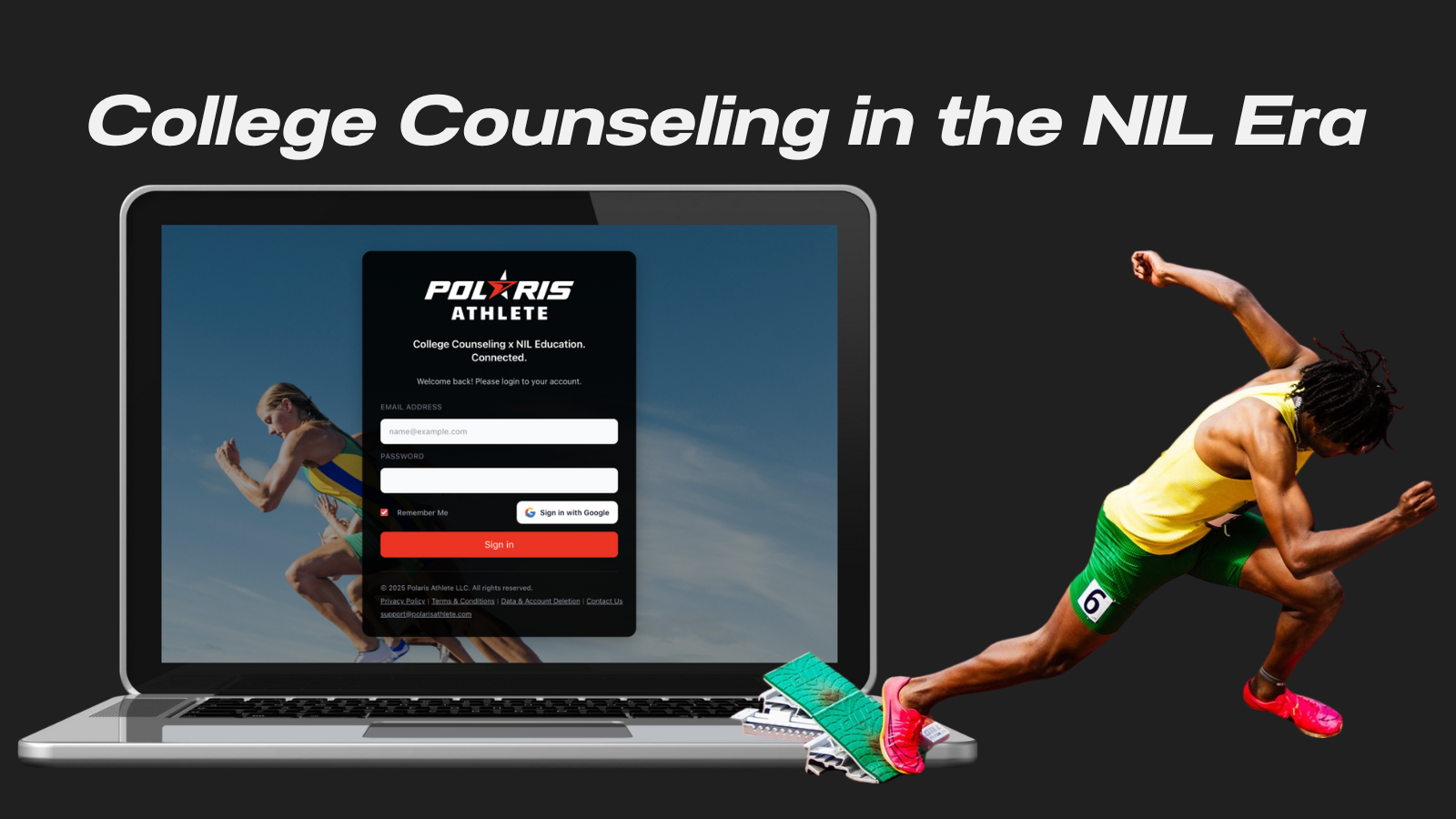
On February 15, Polaris Athlete will launch v1 of our web application, a platform designed to connect college counseling and NIL education in one place.
For counseling departments, this means:
A structured, education-first resource that helps student-athletes understand NIL without compromising academic priorities
Tools that support informed decision-making around visibility, branding, and opportunity
A way to coordinate guidance across college counseling, athletic advising, and NIL education without adding additional work for counselors
Confidence that student-athletes are receiving consistent, ethical, and developmentally appropriate information
Our goal is to reinforce the counselor’s role by providing context, coordination, and education in an increasingly complex environment. As NIL and the creator economy continue to intersect with college planning, Polaris Athlete exists to help ensure student-athletes are supported every step of the way.
Curious how Polaris Athlete fits into your counseling workflow? Request a demo and explore how it supports your work with student-athletes through College Counseling x NIL Education.

Sources
Goldman Sachs Research (2023). The creator economy could approach half-a-trillion dollars by 2027.
S&S Insider (2024). Creator Economy Market Size, Share & Industry Growth Report (2024–2032).
Syracuse University News (2025). Syracuse University launches nation’s first academic center for the creator economy.